Leave a Message

Thank you for your message. We will be in touch with you shortly.

La Verne Neighborhood Guide

Living in La Verne: A Local’s Guide for Relocating Homebuyers If you’re considering moving to La Verne, think quiet confidence. It’s a foothill city that doesn’t try to impress, but wins people over with tree-lined streets, strong community roots, and a lifestyle that feels balanced and intentional. Buyers relocating from LA, OC, the Bay Area, or out of state often land here when they want space, stability, and a true neighborhood feel, without going fully rural.

Overview for La Verne Neighborhood Guide, CA

30,804 people live in La Verne Neighborhood Guide, where the median age is 46.9 and the average individual income is $50,951. Data provided by the U.S. Census Bureau.

30,804

Total Population

46.9 years

Median Age

High

Population Density Population Density This is the number of people per square mile in a neighborhood.

$50,951

Average individual Income

Demographics and Employment Data for La Verne Neighborhood Guide, CA

La Verne Neighborhood Guide has 11,530 households, with an average household size of 2.62. Data provided by the U.S. Census Bureau. Here’s what the people living in La Verne Neighborhood Guide do for work — and how long it takes them to get there. Data provided by the U.S. Census Bureau. 30,804 people call La Verne Neighborhood Guide home. The population density is 3,657.67 and the largest age group is Data provided by the U.S. Census Bureau.

30,804

Total Population

High

Population Density Population Density This is the number of people per square mile in a neighborhood.

46.9

Median Age

48.57 / 51.43%

Men vs Women

Population by Age Group

0-9:

0-9 Years

10-17:

10-17 Years

18-24:

18-24 Years

25-64:

25-64 Years

65-74:

65-74 Years

75+:

75+ Years

Education Level

  • Less Than 9th Grade
  • High School Degree
  • Associate Degree
  • Bachelor Degree
  • Graduate Degree
11,530

Total Households

2.62

Average Household Size

$50,951

Average individual Income

Households with Children

With Children:

Without Children:

Marital Status

Married
Single
Divorced
Separated

Blue vs White Collar Workers

Blue Collar:

White Collar:

Commute Time

0 to 14 Minutes
15 to 29 Minutes
30 to 59 Minutes
60+ Minutes

Schools in La Verne Neighborhood Guide, CA

All ()
Primary Schools ()
Middle Schools ()
High Schools ()
Mixed Schools ()
The following schools are within or nearby La Verne Neighborhood Guide. The rating and statistics can serve as a starting point to make baseline comparisons on the right schools for your family. Data provided by the U.S. Census Bureau.
Type
Name
Category
Grades
School rating

Neighborhood Gallery

lot in prime lower Trousdale Estates with beautiful city views. Newly built in 2016, this property offers epic scale with exceptionally high ceilings.

La Verne Neighborhood Guide

Around La Verne Neighborhood Guide, CA

There's plenty to do around La Verne Neighborhood Guide, including shopping, dining, nightlife, parks, and more. Data provided by Walk Score and Yelp.

62
Somewhat Walkable
Walking Score
29
Somewhat Bikeable
Bike Score

Points of Interest

Explore popular things to do in the area, including Mosaic Athletics, Core Martial Arts, and We The People Brazilian Jiujitsu .

Name Category Distance Reviews
Ratings by Yelp
Active 2.29 miles 30 reviews 5/5 stars
Active 2.92 miles 7 reviews 5/5 stars
Active 4.93 miles 18 reviews 5/5 stars
Beauty 4.78 miles 7 reviews 5/5 stars
Beauty 0.48 miles 8 reviews 5/5 stars
Beauty 4.78 miles 11 reviews 5/5 stars

Quick Take: La Verne at a Glance

  • Small, established foothill city with a strong community identity

  • Best for families, move-up buyers, professionals, and retirees

  • Slower pace than LA proper, faster than mountain towns

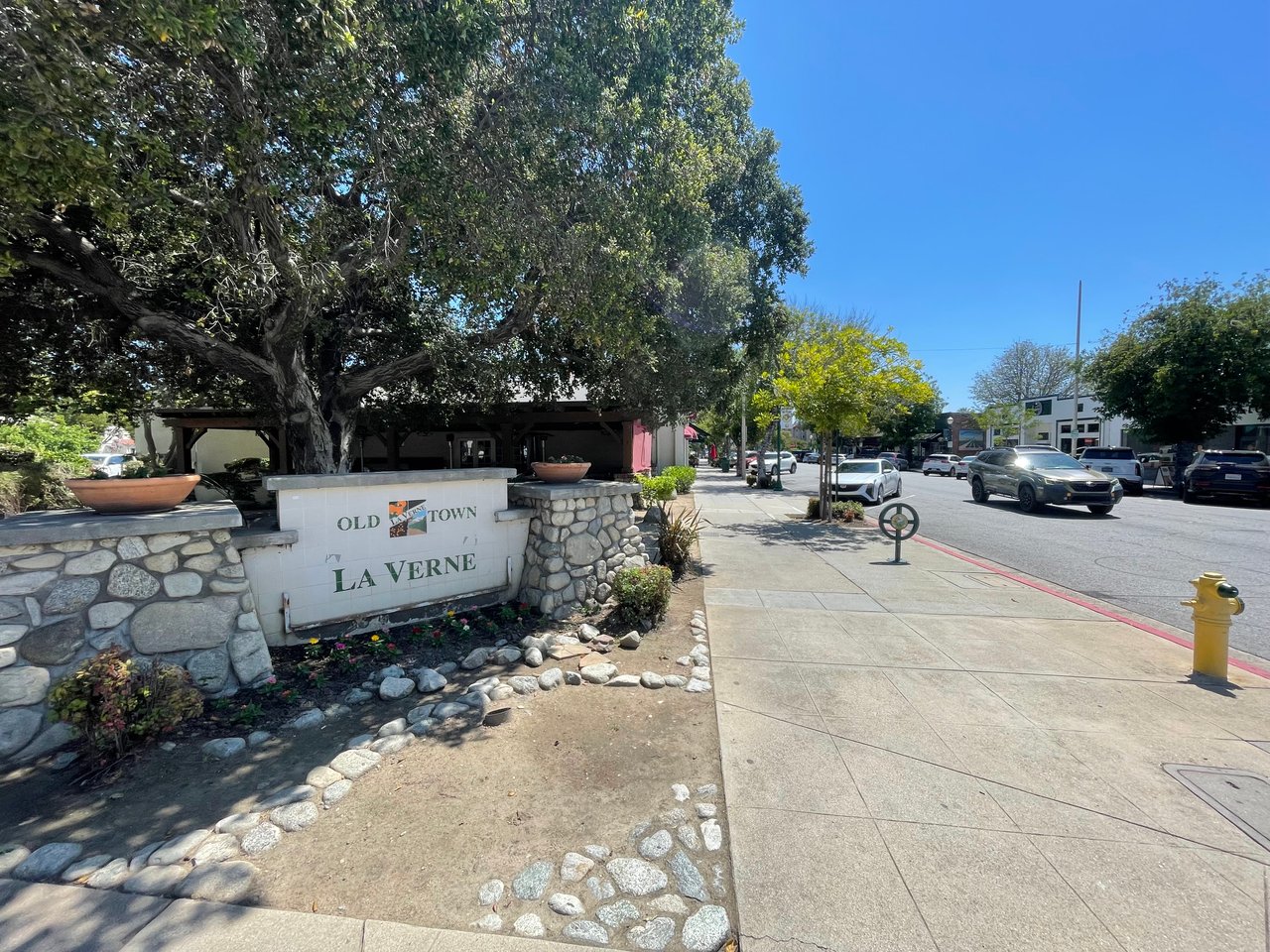
  • Charming Old Town + quiet residential pockets

  • Easy access to the 210, 10, and Inland Empire job centers

  • Known for larger lots, mature trees, and pride of ownership

  • People stay long-term, turnover is relatively low

The Vibe & Lifestyle

La Verne feels calm, residential, and grounded.

Day to day, life here is:

  • Quiet and predictable (in a good way)

  • More car-oriented, less hustle

  • Neighborly; people walk dogs, attend school events, recognize faces

  • Evenings are peaceful; weekends revolve around errands, parks, and Old Town

You won’t find nightlife scenes or trend-chasing energy—but you will find consistency, space, and a sense of belonging.

Parking is generally easy in residential areas, noise is low, and weekends are family-forward rather than frenetic.

Neighborhood Map in Words: Micro-Areas Explained

1. Old Town La Verne (Near D Street & Bonita Ave)

  • Walkable, charming, and community-oriented

  • Cafes, restaurants, small events

  • Smaller lots, older homes

  • Best for buyers who value character and walkability

2. North of Foothill Boulevard

  • Larger lots, quieter streets

  • More traditional single-family neighborhoods

  • Popular with families and move-up buyers

  • Feels tucked away but still convenient

3. Near the University of La Verne

  • Mix of older homes and rentals

  • Academic energy, walkable pockets

  • Appeals to professionals, faculty, and long-term investors

4. Foothill / La Verne Foothills

  • Elevated streets, scenic views in select pockets

  • Larger homes, more privacy

  • Higher price points

  • Strong appeal for move-up and luxury buyers

5. Bordering Claremont / San Dimas

  • Transitional areas with varied architecture

  • Buyers cross-shop Claremont frequently

  • Value-oriented alternatives with similar lifestyle benefits

Housing & Architecture

La Verne homes for sale are mostly single-family residences, with limited new construction.

What you’ll see:

  • Year built: 1950s–1980s dominant, with some newer infill

  • Lot sizes: Larger than many LA suburbs

  • Styles: Ranch, traditional, mid-century, some custom homes

  • Layouts: Single-story living is common and highly desirable

Out-of-towners are often surprised by:

  • How few HOAs there are

  • How much yard space you get for the price

  • The pride of ownership—many homes are meticulously maintained

Commute & Getting Around

La Verne works well for regional commuters.

Common commute targets:

  • Pasadena

  • Downtown LA

  • Inland Empire (Ontario, Rancho, Riverside)

  • San Gabriel Valley

How locals move:

  • Mostly by car

  • Easy access to the 210 and 10 freeways

  • Metrolink access nearby (Pomona/Claremont stations)

  • Bikeable for recreation, not daily commuting

Traffic clusters around Foothill Blvd during peak hours, but overall congestion is manageable compared to LA core areas.

Schools & Learning

Families often choose La Verne specifically for its schools and community stability.

  • Served primarily by the Bonita Unified School District

  • Mix of public, private, and higher education options

  • University of La Verne adds academic presence and cultural events

    • Fair Housing Note: School information is provided for general awareness only. Buyers should independently verify school assignments, performance, and availability through official district and state resources.


Food, Coffee & Local Favorites

The scene is more comfortable + consistent, and locals are loyal for a reason.

Parks, Recreation & Outdoors

  • Las Flores Park – family favorite

  • Hike & bike access toward the foothills

  • Youth sports leagues are active

  • Gyms, studios, and school-based recreation

  • Dog-friendly streets and parks

La Verne is ideal for outdoor time!

Shopping & Errands

Locals keep it simple:

  • Grocery stores along Foothill Blvd

  • Target, Costco, and big-box nearby

  • Small businesses in Old Town

  • Farmers markets and seasonal pop-ups (verify schedules)

Most errands are within a 10–15 minute drive.

Community & Events

This is a “show up and you’re part of it” town.

Things to Consider Before Moving

Honest tradeoffs buyers should know:

  • Limited nightlife and late-night dining

  • Summer heat (foothill climate)

  • Older homes may need updates

  • Some areas fall into fire insurance consideration zones

  • Inventory can be tight due to long-term owners

None are dealbreakers, but they matter depending on lifestyle.

Who La Verne Is Perfect For

  • Families wanting space and stability

  • Move-up buyers leaving denser cities

  • Professionals seeking calm after work

  • Retirees downsizing into community

Homebuying Tips Specific to La Verne

  • Inspect roofs, plumbing, and electrical carefully (older homes)

  • Ask about insurance history in foothill areas

  • Expect competitive offers on well-priced homes

  • Lot size and street location matter more than cosmetic upgrades

Frequently Asked Questions About Living in La Verne

1. Is La Verne a good place for families?

  • Yes! Many buyers choose La Verne specifically for its family-oriented feel. The city is known for established neighborhoods, local parks, community events, and long-term homeowners. Families often appreciate the quieter streets, larger lots, and the sense of stability compared to denser parts of LA County.

2. How competitive is the La Verne housing market?

  • La Verne is competitive, especially for well-priced single-story homes, larger lots, and properties near Old Town or north of Foothill Boulevard. Inventory tends to be limited because many homeowners stay long term. When a home is priced correctly and in good condition, it often attracts strong interest.

3. Are there new construction homes in La Verne?

  • New construction is limited. Most homes were built between the 1950s and 1980s, with occasional newer infill or small developments. Buyers looking for brand-new homes often expand their search to nearby cities, while those who value character and established neighborhoods tend to prefer La Verne’s existing housing stock.

4. What is the average commute like?

  • Commute times vary by destination. La Verne offers convenient access to the 210 and 10 freeways, making it workable for commutes to Pasadena, the San Gabriel Valley, Downtown Los Angeles, and the Inland Empire. Many residents appreciate that daily errands and local activities are close, even if their work commute is longer.

5. Is Old Town La Verne walkable?

  • Yes! Old Town La Verne is one of the most walkable parts of the city. Residents can easily walk to coffee shops, restaurants, wine bars, small boutiques, and seasonal events. Outside of Old Town, most neighborhoods are more car-oriented.

6. How old are most homes in La Verne?

  • Most homes in La Verne were built from the 1950s through the 1980s. Buyers will find a mix of single-story ranch homes, traditional two-story houses, and some custom properties. Many homes have been updated over time, while others offer opportunities for renovation.

7. Are there HOA neighborhoods?

  • HOAs exist but are not widespread. The majority of La Verne is made up of non-HOA, single-family neighborhoods. Some townhome communities or newer pockets may include HOAs, so it’s important to review each property individually.

8. What cities do buyers usually compare to La Verne?

Buyers commonly cross-shop:

  • Claremont for walkability and a larger downtown

  • San Dimas for a similar suburban feel

  • Glendora for more housing variety

  • Upland for inventory and value options

Each offers a slightly different balance of price, character, and lifestyle.

9. What surprises out-of-town buyers most?

Many buyers are surprised by:

  • How strong the sense of community feels

  • How quiet the residential neighborhoods are

  • The amount of yard space compared to denser cities

  • How often residents stay for decades

La Verne often feels more “settled” than buyers expect.

10. Is La Verne quiet at night?

Yes! La Verne is generally calm and quiet in the evenings, especially in residential areas north of Foothill Boulevard. Old Town has some evening activity from restaurants and breweries, but it remains low-key and neighborhood-friendly rather than nightlife-driven.


Search Homes

Let’s Talk

You’ve got questions and we can’t wait to answer them.